Prepping & Planning
-
Remove anything previously installed in the van such as cabinets, flooring, or wall panels
Deep clean the interior of the van
Address visible rust and treat exposed metal to prevent future rust
Begin planning a layout based on your lifestyle, needs, and how you intend to use the van
Consider both the interior layout and exterior components like windows, roof fans, solar panels, and roof-mounted accessories
-
Starting with a clean, empty van makes it easier to build and prevents issues from being hidden behind future installs
Treating rust early helps protect the van’s structure and prevents corrosion from spreading over time
Thoughtful layout planning helps you make the most of a small space and ensures the van functions well for your daily life
Planning early allows interior and exterior components to work together instead of conflicting later in the build
Taking time to plan now provides clarity and direction for the rest of the build process
-
How will I primarily use the van (weekend trips, full-time living, working remotely, etc.)
What features are most important to me (bed size, kitchen space, storage, bathroom, etc.)
What items will I always have with me that need dedicated storage
How can different areas of the van serve multiple purposes
-
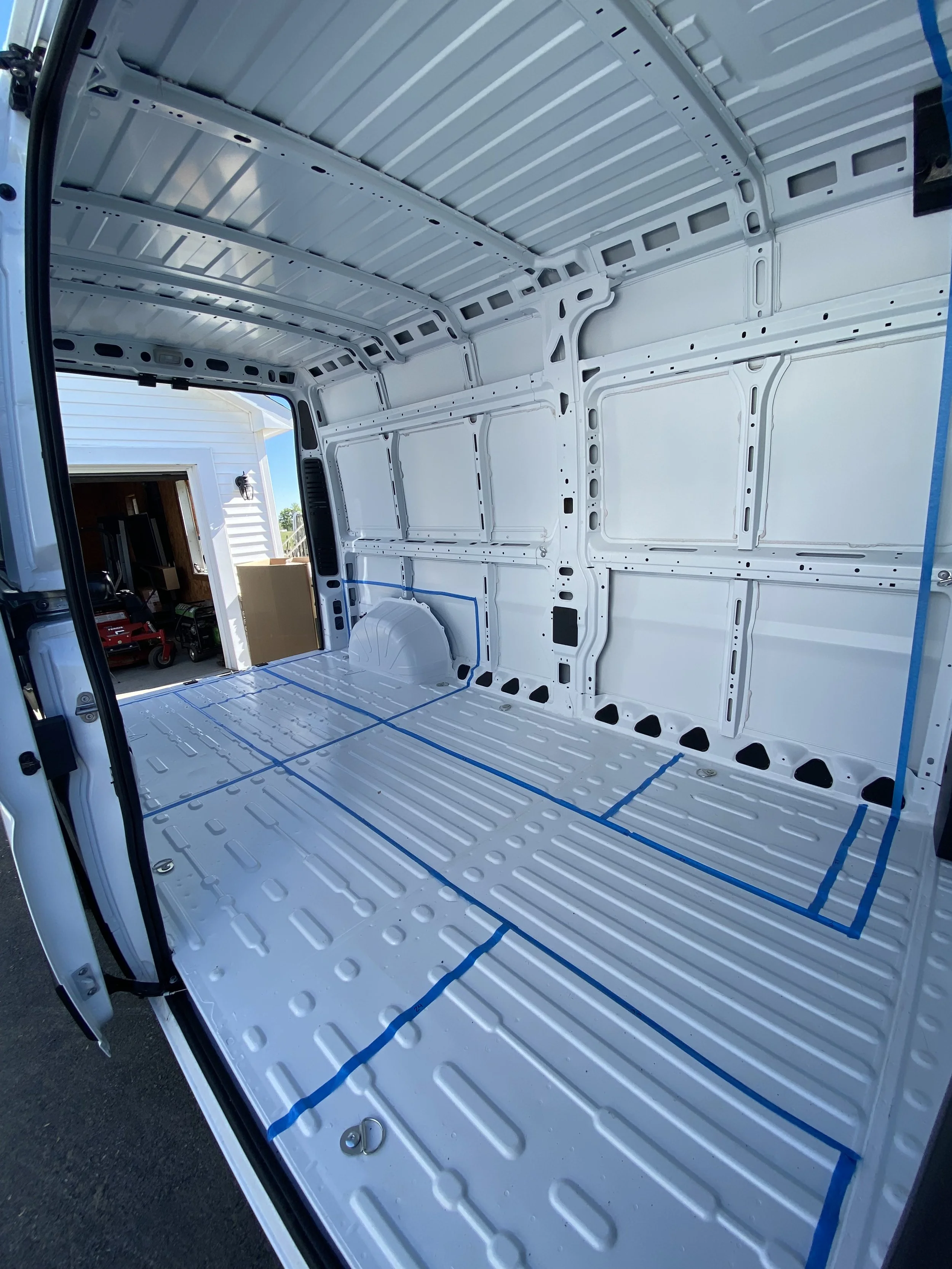
Use painter’s tape on the floor to map out your layout
Place cardboard boxes or items you already own inside the van to help visualize spacing
Think about how you will move around the van and where you will naturally reach for things
Consider how spaces can serve multiple purposes to maximize functionality
Determine your non-negotiables (bed size, toilet, shower, storage, pantry, etc.) and your nice-to-haves
Think about the items you’ll have with you so you can design storage for them
Consider your budget to keep the design realistic and achievable
Don’t design something simply because it looks good online — design for how you will actually live in the space
Think several steps ahead and how each component will fit together as the build progresses
If possible, attend van life gatherings to walk through other vans and see different layouts in person
Renting a campervan for a short trip can also help you understand what layouts work well for you
-
Designing a layout based only on aesthetics rather than how you’ll actually live in the space
Not accounting for where major systems will go (electrical, plumbing, water tanks, batteries, etc.)
Placing items in locations that make daily tasks inconvenient
Not considering how cabinets, doors, and drawers will open and interact with other components
Overbuilding or adding features you may rarely use
Forgetting to plan storage for everyday items
Not considering exterior components like windows, fans, solar panels, or roof decks that may impact the interior layout
-
Your layout doesn’t need to be finalized right away — it will naturally evolve as the build progresses. The goal at this stage is simply to have a strong starting point.
Take the time to think through how you will live in the space, move around it, and store your belongings. A well-planned layout will make the rest of the build process smoother and help ensure your van works for your lifestyle.
Most importantly, remember that this space is yours. There’s no single “right” way to build a van, so design it in a way that works best for you.
Related Resources
Watch the Tutorial


Shop Product Links


Ready to build with confidence?
Follow step-by-step installation guides that break down the most complex parts of the build into clear, manageable steps.
Need help planning your build?
Book a 1:1 Consultation